@TheDrinkDictionary
The Art of the Blend
Over 90% of all Scotch whisky sold worldwide is blended — not single malt. Here is why.
Blended Scotch whisky is the world's most popular whisky category — and the most misunderstood. It is not a lesser version of single malt. It is a distinct craft: the art of combining single malt and grain whiskies from multiple Scottish distilleries to create a spirit that is balanced, consistent, and approachable. The master blender's job is one of the most skilled in the spirits world — selecting from hundreds of casks to recreate the same flavour profile, batch after batch, year after year. Brands like Johnnie Walker, Chivas Regal, Dewars, and Ballantine's have built global empires on this craft. In India, Blended Scotch is a massive category with 385 products ranging from ₹210 to over ₹5,00,000.
What Makes It 'Blended'
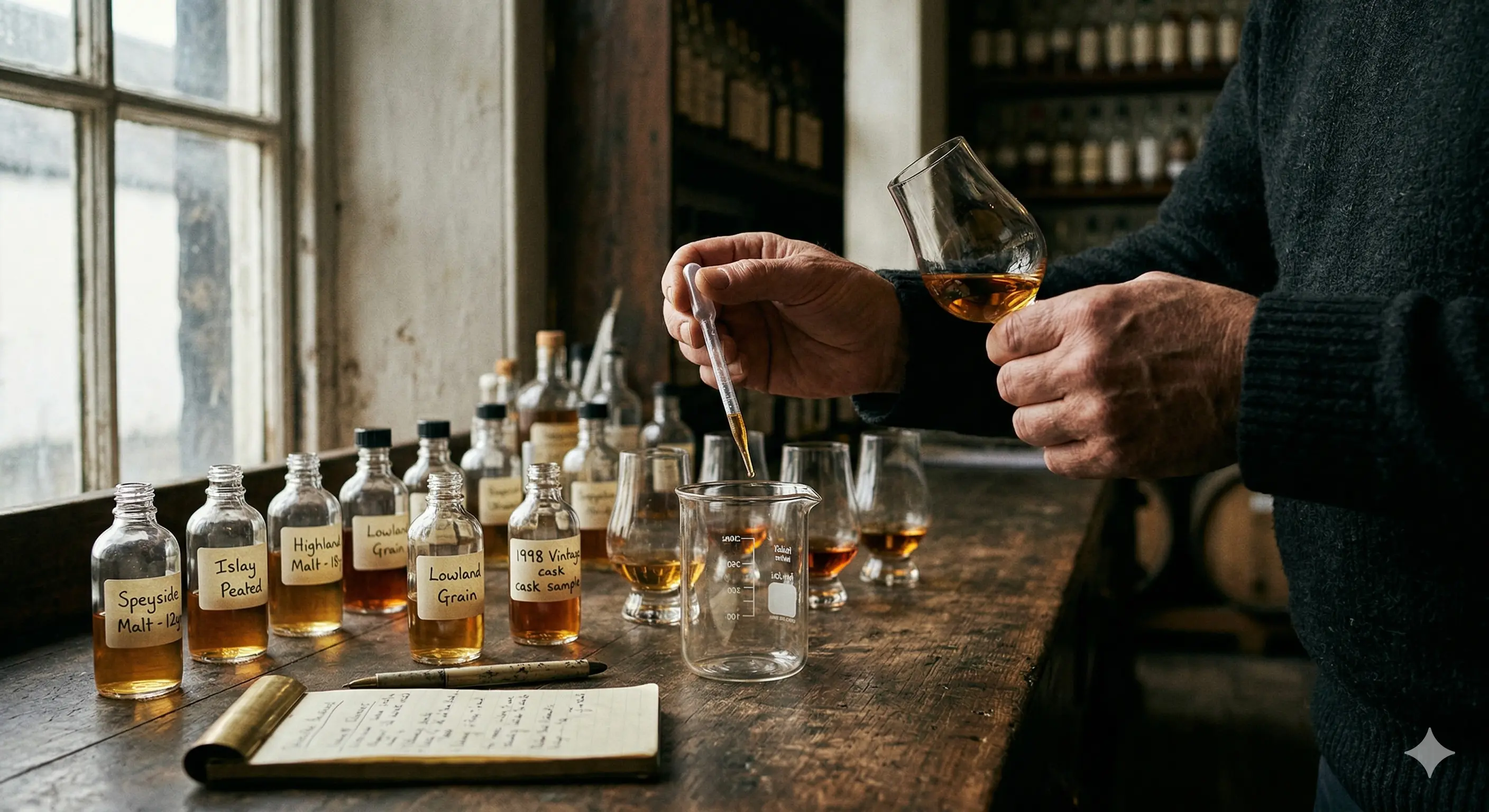
A Blended Scotch combines two types of whisky: single malt (made from 100% malted barley at one distillery using pot stills) and grain whisky (made from various cereals using column stills, which produces a lighter, smoother spirit). The master blender selects from dozens — sometimes hundreds — of individual casks to create the final product. The grain whisky provides the smooth, accessible base; the single malts provide character, depth, and complexity.
How a Blend is Built
FROM CASK TO BOTTLE
Blended Scotch vs Single Malt
Single malt comes from one distillery and showcases that distillery's unique character — its water source, still shape, and local terroir. Blended Scotch is an orchestrated composition: the blender cherry-picks the best qualities of many distilleries and grain whiskies to create a balanced, consistent profile. Think of single malt as a solo artist and blended Scotch as a symphony orchestra.
💡 THE 90% STAT
Blended Scotch accounts for over 90% of all Scotch whisky sold globally. Every year, brands like Johnnie Walker, Chivas Regal, and Ballantine's outsell all single malts combined. The idea that blended = inferior is a marketing myth created by single malt brands in the 1990s.
How to Drink It
Entry-level blends (Johnnie Walker Red, Teachers, VAT 69) are designed for mixing — with soda, cola, or in highballs. Mid-range blends (Black Label, Chivas 12, Ballantine's Finest) are excellent on the rocks or with a splash of water. Premium blends (Blue Label, Royal Salute 21) should be sipped neat in a tulip glass to appreciate their complexity. There is no wrong way — the best way is the way you enjoy it.
Frequently Asked Questions
Is Blended Scotch lower quality than Single Malt?
Not at all. Blending is a skilled art — the master blender combines 15–50 different single malts with grain whisky to create a consistent, complex product. Some of the world's most acclaimed whiskies (like Johnnie Walker Blue Label or Chivas 18) are blends. The distinction is about style, not quality.
What do the Johnnie Walker label colours mean?
Red Label is the entry-level blend designed for mixing. Black Label is aged 12 years with a smokier profile. Green Label is a blend of single malts only. Gold Label is an 18-year expression. Blue Label is the pinnacle — made from rare casks, with no age statement, priced above ₹10,000.
Why does the same Blended Scotch taste the same every year?
That is the entire point of blending. A single cask changes flavour every year. The master blender's job is to mix dozens of casks to recreate the exact same profile every batch. Consistency is the product — and it is incredibly difficult to achieve.
Published: 2026-04-01
Featured Products
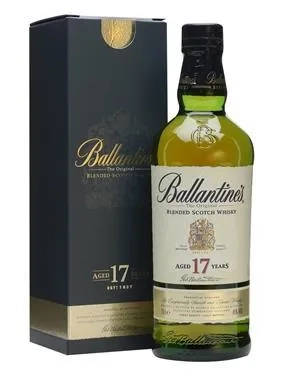
Brand: Ballantines
Ballantine Aged 17 Yrs Blended Scotch Whisky
750ML
Overall Rating: 4.4
₹6,640
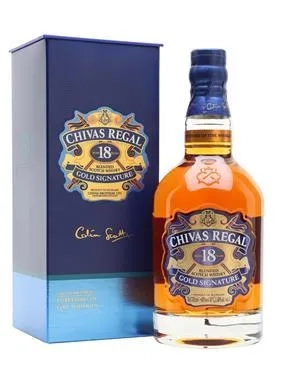
Brand: Chivas Regal
Chivas Regal 18 Yrs Blended Scotch Whisky
750ML
Overall Rating: 4.3
₹5,500
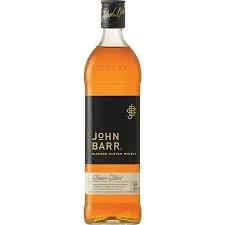
Brand: John Barr
John Barr Reserve Blended Scotch
750ML
Overall Rating: 4.5
₹1,870
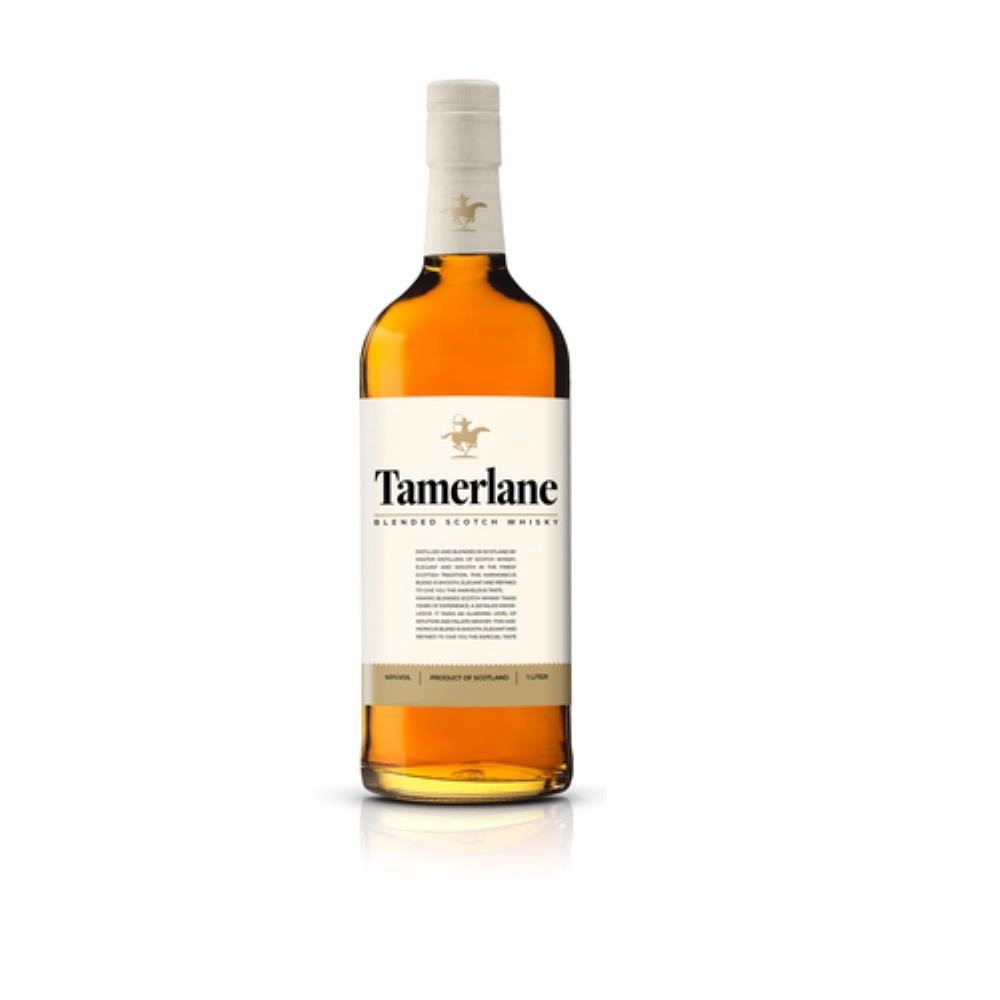
Brand: Tamerlane
Tamerlane
750ML
Overall Rating: 4.6
₹1,780
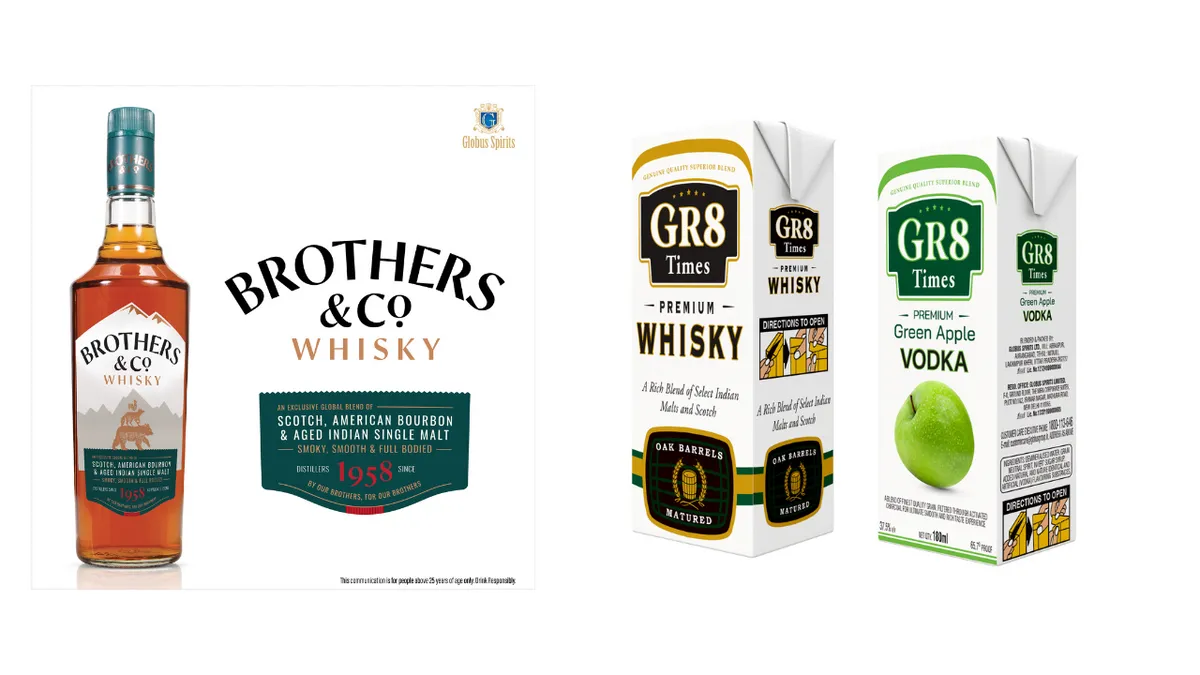
Brand: Brothers & Co
Brothers & Co Blended Whisky
750ML
Overall Rating: 4.8
₹750
Disclaimer:
- We aggregate data from multiple public sources, hence actual prices may vary, visit local retailers for latest information.
- We do not offer Home Delivery. Be aware of fraudsters.
- Drink Less. Drink Better. Drink Responsibly.
- Reach out to us contact@livcheers.com